
Whitewater Rafting Levels: What Class I to VI Mean and Your First Trip

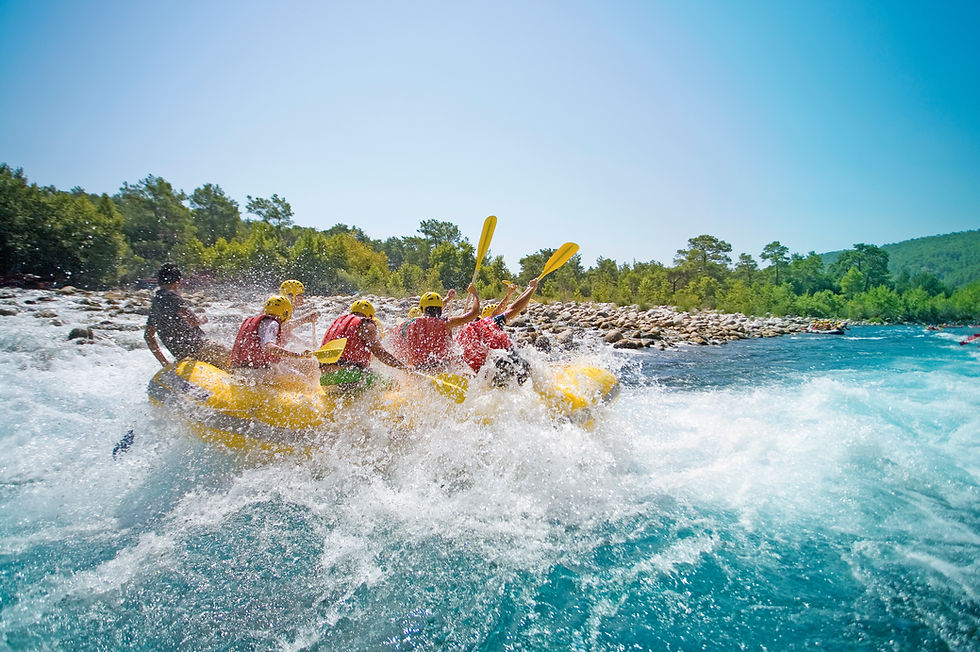
Whitewater rafting is the rare adrenaline sport where a complete beginner can sit in the boat on day one. A guide steers, the crew paddles on command, and the river provides the drama. That accessibility hides a sport with real depth, from family float trips to expedition rivers and a competitive scene with world championships. The key that unlocks all of it is the river grading system, because once you can read a grade you can choose a trip that matches your appetite exactly. This guide explains the grades, the safety picture and how the sport is organised. If water team sports appeal, our guide to underwater hockey covers a very different way to get wet with a team.
Key Takeaways:
The grade tells you everything: Rivers are rated Class I to VI on the International Scale of River Difficulty, and matching the grade to your group is the single most important trip decision.
Beginners belong on Class II and III: These grades deliver splashes, waves and excitement with wide safety margins, which is why most commercial day trips run there.
Guides carry the expertise: Commercial rafting requires no prior skill because a trained guide reads the river and commands the paddling.
Rafting began as a peace project: Modern raft racing grew from Project RAFT, a Soviet-American initiative that staged its first event on Siberia's Chuya River in 1989.
Two international bodies: The International Rafting Federation and the World Rafting Federation both organise the sport globally, with the IRF running the longest-standing guide certification scheme.
New Zealand sets a benchmark: Tutea Falls on the Kaituna River is the highest commercially rafted waterfall in the world, run by a commercial industry regulated under dedicated adventure activity law.
Table of Contents
Whitewater rafting levels: how river grading works
Rivers and individual rapids are rated on the International Scale of River Difficulty, maintained by American Whitewater and used as the common reference worldwide. It runs from Class I to Class VI:
Class I: Fast-moving water with riffles and small waves. Risk to swimmers is slight.
Class II: Straightforward rapids with wide, clear channels. Occasional maneuvering needed.
Class III: Moderate, irregular waves and complex manoeuvres in fast current. The classic exciting commercial grade.
Class IV: Intense, powerful but predictable rapids demanding precise boat handling. For fit, committed crews.
Class V: Long, violent or obstructed rapids with serious consequences. Expert territory.
Class VI: At the limits of navigability. Teams of experts only, in favourable conditions, after close inspection.
Two caveats the scale's own authors insist on: grades are not exact, and a river's difficulty changes with water level, weather and season. The same rapid can be a splashy Class III in summer and something else entirely after heavy rain, which is why operators adjust or cancel trips as flows change.
Is whitewater rafting safe?
Commercial rafting on beginner grades has a strong safety record, built on a few unglamorous pillars being trained and certified guides, mandatory personal flotation devices and helmets, safety briefings that teach you how to float in a rapid if you do swim, and trip plans matched to conditions. American Whitewater's safety code, the reference document for the sport, is blunt that the main hazards are cold water, high flows and entrapment obstacles such as fallen trees, all of which are exactly the things professional operators plan around.
Your job as a customer is short, wear what you are given, listen to the briefing, and paddle when the guide says paddle. The most useful question to ask an operator beforehand is what qualifications their guides hold. The International Rafting Federation runs a guide training and education scheme that is recognised internationally, and many countries have their own national certification on top.

Choosing your first trip
Match three things: the grade, the group and the season.
For a first taste with mixed company, a half-day Class II to III trip is the sweet spot, exciting enough that everyone gets soaked and nobody is overfaced. Confident, fit groups who want a step up can look at Class III to IV day trips. Multi-day expedition trips, where rafts carry camping kit down remote rivers, are the sport's best-kept secret and mostly run on friendly grades, with the wilderness rather than the whitewater as the point.
Season matters because rivers are snow- and rain-fed. The same river can be at its most powerful in late spring and gentlest in late summer, and operators will tell you plainly which weeks suit which appetite. Book with an operator who asks questions about your group rather than one who just takes the payment.
What your first trip looks like
Every commercial trip follows the same rhythm, and knowing it in advance takes most of the nerves out of the day. You arrive, sign in and get your kit: a personal flotation device, a helmet, a paddle and, where the water is cold, a wetsuit, all typically included in the trip price. Then comes the safety briefing, which covers the paddle commands your guide will use, how to hold on, and what to do if you end up in the water. Listen to this part properly; it is the most important ten minutes of the trip.
Ending up in the water is planned for, not a failure of the plan. If it happens, grab the raft's outside safety line or a paddle if one is offered. If you drift clear, settle into the defensive swimming position taught in every briefing: on your back, feet up and pointed downstream, so your feet meet any rocks first and cannot snag on the riverbed. When your guide points you to the raft, a throw rope or the bank, roll over and swim hard for it. Your guide and safety crew are trained for exactly this.

Rafting with children
Family rafting is a genuine strength of the sport. Operators run gentle Class I to II float trips that take young children, while older children and teenagers typically join Class II to III trips subject to minimum age, weight and swimming requirements that vary by river and country. The variables to check are the operator's minimum age for the specific river and season, whether they supply child-sized flotation and helmets, and how they handle a child who ends up swimming. A good operator answers all three without being prompted.
Where rafting is exceptional: New Zealand
If one country shows how central rafting can be to a nation's outdoor identity, it is New Zealand. Commercial trips have run out of Queenstown and the central North Island since the 1970s, and the industry matured the hard way: after a fatal accident on Queenstown's Shotover River, operators formed an association to set standards, the forerunner of today's New Zealand Rivers Association. Operators must now register under the Health and Safety at Work (Adventure Activities) Regulations 2016 and pass independent safety audits, with the Rivers Association recognised by WorkSafe New Zealand as the industry's leadership body and technical lead.
The showpiece is the Kaituna River near Rotorua, where Class V commercial trips drop over Tutea Falls, a seven-metre waterfall that is the highest commercially rafted in the world. The river, known to local iwi as the Ōkere Awa, has been a significant waterway for Māori for centuries, and many guided crews pause above the falls for a karakia, a Māori blessing, before the drop.
The racing pedigree matches the rivers: Rotorua hosted the 2013 World Rafting Championships across the Kaituna, Tarawera and Rangitaiki rivers, the first time the event had been staged in New Zealand. For a visiting rafter the practical appeal is the spread: gentle scenic floats, classic Class III day trips and genuine Class V, all inside a small country with a regulated, audited commercial industry. One local rule says much about the safety culture: commercial rafting on Class VI water is not accepted practice in New Zealand.
My own introduction to New Zealand's rivers came by both rafting and kayaking, on Class I and II water on the Kawarau near Queenstown and the Pelorus in Marlborough. Being new to the sport, I opted for the gentle grades to begin. This was enough to show me why people fall for moving water and definiately on the bucket list the next time and what has sparked my interest to find out more about this sport.
Rafting as a competitive sport
Raft racing has an origin story worth knowing. Its modern form grew out of Project RAFT, short for Russians and Americans for Teamwork, a peace-through-sport initiative that staged its first international event on Siberia's Chuya River in 1989, at the height of glasnost. Those gatherings evolved into world championships, and competitive rafting today is raced in four disciplines: sprint, head-to-head, slalom and downriver, in four-person and six-person crews, with points across the disciplines deciding the overall champions. The International Rafting Federation's World Rafting Championships bring together national teams from dozens of countries, and para rafting classification and rules were introduced in 2021, opening the racing pathway to athletes with disabilities.
Who governs rafting?
Rafting's international governance currently involves two bodies, and it is worth knowing both. The International Rafting Federation (IRF), founded in 1997, organises the World Rafting Championships, runs the sport's internationally accepted guide training and education scheme, and was granted observer status by the Global Association of International Sports Federations in 2019.
The World Rafting Federation (WRF) became an associate member of the International Canoe Federation in 2018 and also stages international competition. National rafting federations affiliate to one or both.
For a recreational rafter, national paddling and rafting bodies are the practical points of contact for clubs, safety resources and river access:
Australia: Australian Rafting Federation: Raft racing, national team selection and Australia's affiliation to the International Rafting Federation, it hosted the 2019 World Rafting Championship on the Tully River.
United States: American Whitewater: The river safety code, the difficulty scale, and river conservation and access work.
New Zealand: New Zealand Rivers Association: Raft guide qualifications, an operator directory and industry standards; recognised by WorkSafe New Zealand as the sport's commercial leadership body.
International: International Rafting Federation: Guide certification, raft racing and the list of national member federations.
If your country has a national rafting federation, the IRF's membership is the place to find it; where rafting sits within a broader paddlesports body, your national canoeing federation will point you to it.
Final Thoughts
Rafting's genius is that it meets you exactly where you are. The same sport contains a gentle float with young children, a soaking Class III day out with friends, a remote week under canvas on an expedition river, and a world championship sprint, all graded on one consistent scale so you always know what you are signing up for. Pick a grade, pick a season, ask your operator good questions, and let the river do the rest.
Frequently Asked Questions (FAQ)
Q: Do I need to be able to swim to go rafting?
A: Most operators require basic swimming ability and all provide personal flotation devices. Confident swimmers have more options, but gentle trips accommodate weak swimmers. Be straight with your operator about ability.
Q: What do the river classes mean?
A: The International Scale of River Difficulty runs from Class I (moving water with small waves) to Class VI (at the limits of navigability). Most commercial beginner trips run Class II to III.
Q: What should I wear rafting?
A: Operators supply the safety kit: flotation device, helmet and usually a wetsuit where water is cold. Bring swimwear, secure footwear and a change of clothes. Leave anything you cannot afford to lose on shore.
Q: How old do children need to be?
A: It depends on the river, season and operator, with gentle float trips taking young children and Class III trips typically setting higher minimums. Always ask about the specific river and date.
Q: Is rafting a competitive sport?
A: Yes. Raft racing is contested in sprint, head-to-head, slalom and downriver disciplines, with world championships organised internationally and a para rafting pathway introduced in 2021.
Q: How much does whitewater rafting cost?
A: In the United States, half-day commercial trips typically cost US$40 to $120 per person, full days US$75 to $250, and multi-day expeditions from around US$400 to over US$7,000, as of 2026. The price normally includes the raft, guide, flotation device, helmet and transport to and from the river; confirm what is included when you book.
Q: What happens if I fall out of the raft?
A: Hold the raft's outside line if you can reach it. If not, float on your back with your feet up and pointed downstream until your guide directs you to the raft, a throw rope or the bank, then swim for it. Every commercial safety briefing teaches this before you launch.

